
Scroll

Laurie MacCaskill was given a death sentence...more than once.
Today, she can honestly say that her journey with pancreatic cancer has been a gift.
Laurie, known for her inspiring story Treatment on the Trail, takes audiences on her life-changing journey through an experience with one of the deadliest cancers that exist, pancreatic cancer. Her authentic and compassionate style have earned her praise from doctors, researchers, patients, caregivers and major organizations worldwide.
Laurie’s story provides a framework for others to redefine how they look at their own lives. Audiences leave feeling courageous, reinvigorated and ready to be their own advocate through individual adversities.


Treatment on the Trail
Watch as Laurie administers her own cancer treatment at 9,800 feet.
Was a bike ride up a mountain the perfect setting that Laurie MacCaskill's doctor would have liked her cancer treatment to be administered? Probably not! But she felt that she was careful, conscientious and most importantly, living her life.
Read Laurie’s Latest Blogs
Laurie’s Cancer Blog: A life interrupted by pancreatic cancer


You asked, we answered! I am ecstatic to announce that my first digital cancer workshop is launching this September! I have joined forces with my dear friend, Tina Staley, a licensed clinical social worker, and cancer coach. Together we have created the Thrive with Cancer Workshop, a four-week life-changing, experiential workshop that will equip cancer patients with greater awareness, determination, and the best tools to help them thrive through their illness.

Throughout my pancreatic cancer treatment journey, communicating and staying connected to my medical team was crucial because pancreatic cancer was a subject I knew nothing about. I relied on my ability to do the things I could control. I feel that focusing on education/research, knowing my body, paying attention to how I felt emotionally, physically, and spiritually, respecting how information was conveyed to and from me, being my own advocate, using my voice, and comprehensive record keeping allowed me to eliminate the toxicity of negative interactions and create an environment for healing.

I was told to get my affairs in order; I had less than six months to live. I determined that I would not allow a pancreatic cancer diagnosis to beat me and fulfill the prediction. This month, I am celebrating sixteen years as a pancreatic cancer survivor. I have great love, gratitude, and awareness of how fortunate I am.

Everyday things I took for granted before my diagnosis, that were formerly performed with energy, enthusiasm and often with little effort, were now overwhelming. My road to recovery after discovering I had a pancreatic tumor was not a straightforward path; in fact, there was nothing encouraging about it at all. My mood was gloomy, and it was difficult to fathom that every day was going to be like the last, an unending, painful mere existence.

Most people desire to be independent, to manage life with a sense of control. Having a plan makes it seem we are approaching our goals and aspirations.
However, when I heard those devastating words, “I’m sorry, you have pancreatic cancer,” my world was suddenly full of vulnerability and uncertainty. I replied, in a cavalier way, “I do not. That’s a death sentence. You have the wrong file. Please get the right one.” I honestly thought my two-month-long backache was the result of an infection and could not fathom it was something so much more threatening.

A backache would forever change my life. I have shared my journey with pancreatic cancer on my website, and many of you know what an agonizing experience cancer can be. I was often asked, “How do you live when everyone says you are dying?” Pancreatic cancer is the world’s toughest cancer, with a five-year survival rate of just 10%. In the United States, it is the third most deadly cancer and about 70% of patients die within one year of diagnosis. To be given three months to live, as I was, is the last thing anyone wants to hear.

Pancreatic cancer is one of the deadliest cancers with a five-year survival rate of just 10 percent. In the United States it is the third most deadly cancer, and approximately 70 percent of patients die within one year of diagnosis. We know early detection and prevention can change this.

A diagnosis of cancer can feel like you have stepped into an empty elevator shaft. Regardless of the type of cancer, it can be a new shade of human darkness. When I heard, "Laurie, I am sorry you have pancreatic cancer," my reply was, "I do not; that is a death sentence; you have the wrong file."

In conversations about my cancer journey, I often reference silver linings. I was honored to interact with Tomma Hargraves and learn about the important work she is doing on behalf of cancer patients. Tomma is an inspiring trail blazer who survived stage 3 lung cancer 15 years ago. Meeting her was a silver lining and a gift for so many reasons! I can’t wait to share her story with you in just a few minutes!

Living with so much uncertainty is hard. Human beings crave information about the future. Not getting answers around pancreatic cancer is one of the most challenging parts of the disease. I tell my patients it is unlike anything we have ever experienced. In our professional and personal lives, we are used to getting solutions to our problems. In managing any challenge, it is essential that we trust our team, believe in ourselves, and stay grounded in the present moment. Staying disciplined, identifying and focusing on our strengths is vital to managing self-control and creating a positive mindset and a healing environment.

What would you do with an extra hour each day?
What would you change if you knew you had months to live?
If you were to rewrite your story, what would be different?
I have been given the gift of time. On June 27, 2021, I will celebrate 15 years as a pancreatic cancer survivor. At the time of my diagnosis, 94% of those diagnosed died in the first 12 months. Today, the 5-year survival rate is an unacceptable 10%.

I honestly believe I am alive today because of a unique genetic make-up I possess and a doctor that thinks outside the box. This is not true for everyone. Pancreatic cancer is the 3rd deadliest cancer with no early detection markers. By the time symptoms appear, it is usually advanced. The 5-year survival rate is a mere 10%.
Genetic testing was never discussed with me by any doctor over the four years I was in treatment. Nor was this suggested in nine years following.

In overcoming pancreatic cancer, what comes to mind in how you dealt with the prognosis of a deadly cancer and months to live? Are there similarities to this current COVID situation?

The unthinkable happened.
On January 6, 2021, a violent attack occurred at the very core of our democracy. It was just one failure in a dizzying list that day — and during the weeks leading up to it — that resulted in the first occupation of the United States Capitol since British troops set the building ablaze during the War of 1812. But the death and destruction this time was caused by Americans. We were experiencing a new shade of human darkness.

Incredible acts of kindness were bestowed on my behalf recently by many of you and I can only now address this without tears in my eyes. You have touched every cell in my body, every core of my being. I am sharing this with you from my depth not my shadow.

My intention has been to write the next blog about my move to Dallas. This was a very traumatic experience filled with so many unknown variables, but I was able to turn lemons into lemonade. And, I will share this story with you as there are many lessons learned but as John Lennon said, “Life is what happens when you're busy making other plans.”
I was just diagnosed with endometrial cancer which is a type of cancer that begins in the uterus.

When I learned I had pancreatic cancer, I wondered what difference would it have made for me to get genetic testing? I had no idea the role my genetic make-up played in my success as a survivor 14 years later.

Human health does not come with a guarantee nor does our life expectancy. I did everything “right” in terms of diet, health and fitness. I practiced ultimate nutrition my entire life, diligent about health check-ups, never smoked and exercised 5 to 6 days a week for over 40 years. After years of treatment for pancreatic cancer and to be told I had 3 months to live, I asked my doctor what I could have done differently to not get this death sentence. His response, “Absolutely nothing.”

I am often asked if I have anxiety about results of scans, tests, and reoccurrence. Of course there are questions and concerns, but I can say with all sincerity, I am fairly calm and don’t dwell on this. I never play the “what if” game. I believe this is a result of the healthy denial I have often referred to. It is an astonishing mix of fragility and ferocity. I have the capability to eliminate this from my mind or at the very least, move it to the back burner.
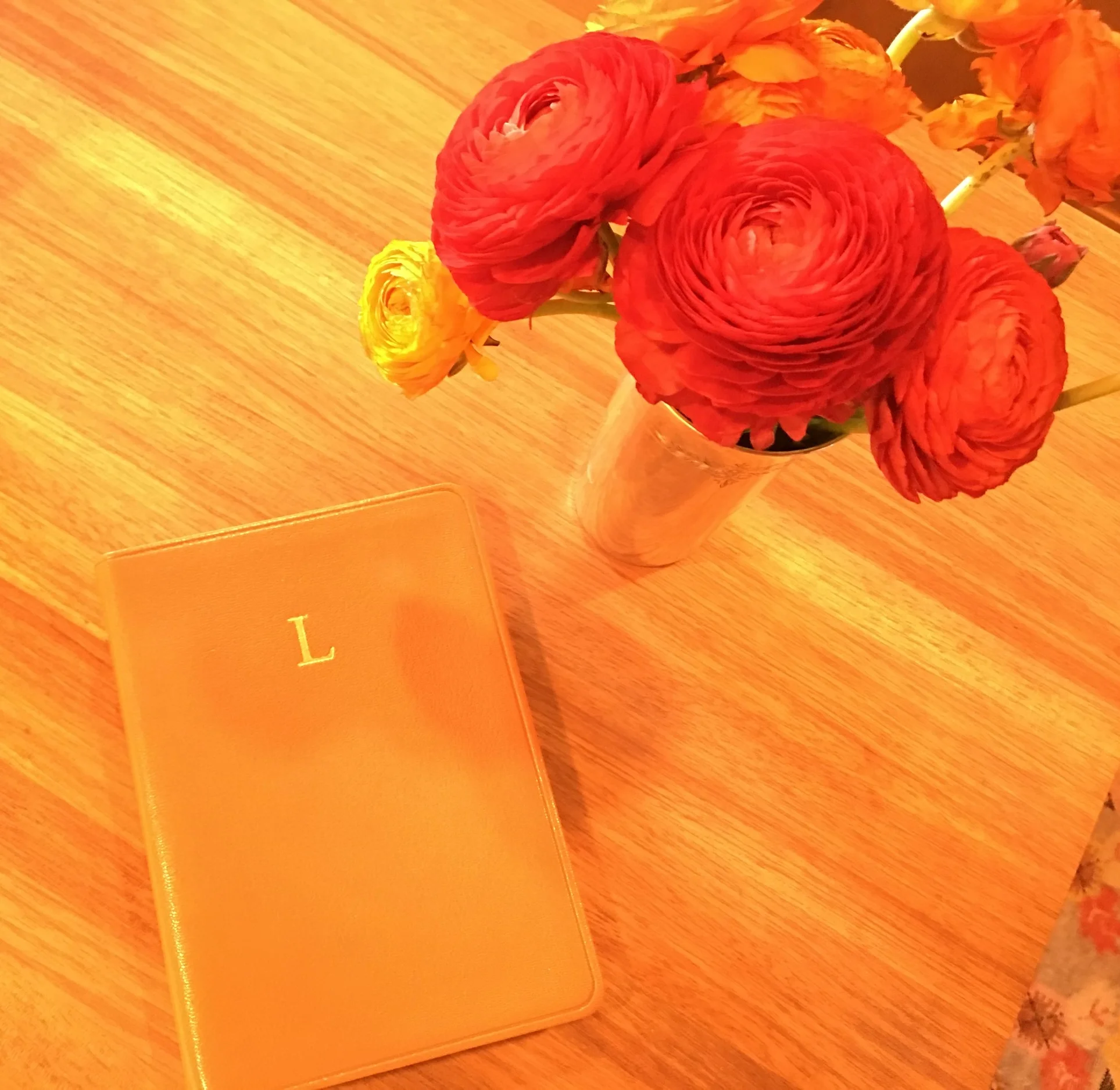
When was the last time you did something for the first time? I had a new experience recently, taking a writing class with Jennifer Louden, a best selling author. Reading about this in the Paris Review, I stepped out of my comfort zone and plunged in, head first. The setting: 1440 Multiversity in Scotts Valley, CA. Named for the 1440 minutes in a day, 1440 is founded on the belief that each minute is a chance to connect with what truly matters—both within and around us.

I, like so many, am reeling from the suicides of Kate Spade and Anthony Bourdain. I am struck by the tremendous impact that Kate Spade had on people everywhere. It is even more extraordinary knowing that she wasn’t overly present for the past decade, which speaks volumes for the emotional connection to the brand and what she stood for.

A recent dinner conversation inspired me to share these thoughts with you. Lovely friends, Kelly and Harry, had just returned from touring the house they were moving to in a few days. On several occasions, the owners graced them with detailed descriptions of the fabulous furniture, accessories and art that would now be in their new living space. The husband had previously regaled them with fascinating stories of the history and provenance of the priceless works of art – valuable antiques, a Baccarat chandelier, precious rugs, art dating back centuries – all museum quality. The wife would describe how these were acquired, the rarity and value, which in some ways, was daunting!

I have struggled writing this blog, finding it impossible to finish a thought with tears welling up and at times, completely incapable of writing. I have a catalog of strong emotions when I think about my girlfriends and what they have given me. We know that a single event cannot only shape your life, but illuminate it. Being told I have pancreatic cancer did both of these for me.

By the time this is posted much will have been written on the devastating tragedy in Parkland, Florida. As a nation, we experience so much grief, however in our own lives, none more shattering than losing a loved one.

I recently read the book “A Gentleman In Moscow” by Amor Towles. On Page 1, he writes “Well, where is our purpose now? Like so many questions I answer this one with the eye-averted peeling of a pear.” As with every chapter in this wonderful book, this is written with sophisticated humor in rich and poetic language.

I am shaking a storyteller’s snow globe and the result is not just a fictional snowstorm, but also the rearrangement of what many perceive this time of year to be.

While the holidays are known for being a time of joy and cheer, that may not be the case for somebody who is sick, struggling physically or mentally, fighting for their life, or less fortunate than us. We live in an age consumed by things. And, it is no more evident than at this time of year. The frenzy of shopping, crowds, long lines, large credit card bills – it is assumed that happiness can be gift-wrapped.

Thanksgiving is my favorite holiday. I pay particular attention to the very good life I am fortunate to live and the countless things I am grateful for. The holidays can bring out all kinds of emotions – incredibly joy spending time with family and friends, enjoying a beautiful meal together, taking a bit of well-deserved vacation – but it can also be stressful.


Julie Fleshman | President & CEO, Pancreatic Cancer Action Network
“Laurie is a gift to everyone who has the incredible opportunity to hear her speak. I can’t say enough about her innate style to engage and transform an audience. You will leave the experience a better person for having known and heard her tell her story.”
Work With Laurie
Book Laurie for a one-on-one cancer coaching session or for your next professional speaking engagement.

During my early years of cancer treatment, I held onto the hope that I might be the exception—the one person who wouldn't lose their hair due to chemotherapy. Unfortunately, that hope was shattered when the hair loss began.